


.png)
The Progress Behind the Pink: What’s Next in Breast Cancer Care
Over 1,000 women will be diagnosed with breast cancer today, and almost 400,000 women will be diagnosed with breast cancer this year. Breast cancer is the second most
October 21, 2026
.png)
The dominant stakeholders in major pharmaceutical markets, payers, are seeking better value for healthcare spending. With increasing financial pressures, payers are focusing on optimizing the value of healthcare spending.
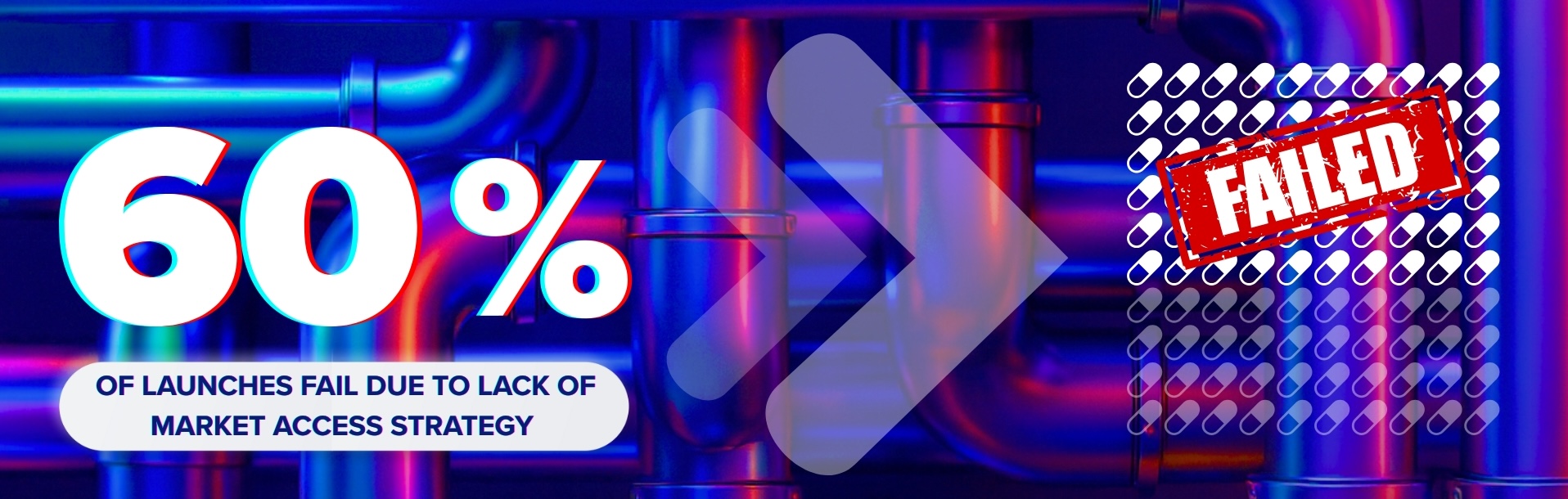
One of the most common mistakes companies make is treating market access as an afterthought, when in fact it should be treated as a critical component integrated early in the development process. Deloitte revealed that nearly 60% of drug launches failed due to limited market access, followed by nearly 50% lacking adequate understanding of the market and customer needs, and 41% lacking clear product differentiation. By considering payer needs and market dynamics during the R&D phase, you can build a stronger case for your product from the start.
During the early stages of drug development, focus on the following:
Evidence is everything when it comes to payer approval. A well-rounded evidence generation plan should go beyond traditional clinical trials to include real-world evidence (RWE) and health economics and outcomes research (HEOR).
Key elements of your evidence plan should include:
Different payers have different priorities, and understanding these nuances is crucial. While some focus on cost-effectiveness, others may prioritize clinical innovation, patient outcomes, or reducing healthcare resource use. To build a winning market access strategy, you must tailor your approach to each payer's needs. Research each payer group, focusing on:
Engaging stakeholders early and often is a vital part of any market access strategy. This includes not only payers but also healthcare providers, patient advocacy groups, and even policymakers. These relationships can help you build support for your product before it even reaches the market.
Here’s how to make stakeholder engagement work:
Over one-third of newly launched products fail to meet projected revenue forecasts, and for more than half of these, limited market access is the primary culprit. Payers face constant pressure to manage costs, making pricing negotiations a potential sticking point. A clear, data-driven pricing strategy is therefore essential to securing and sustaining market access.
Strategies for successful pricing and reimbursement include:
Market access doesn’t stop once your drug is approved. Post-launch strategies are just as important to maintain and expand access. Keep monitoring real-world outcomes, gather post-market data, and be ready to adjust as necessary.
Focus on:
In the race to bring new drugs to market, a bulletproof market access strategy is your best chance for success. From the early R&D phase to post-launch market dynamics, each step of the journey is an opportunity to strengthen your product’s value proposition and secure payer approval.
By starting early, building a solid evidence base, understanding payer needs, engaging stakeholders, and mastering pricing negotiations, you can confidently guide your drug from pipeline to payer approval—and ultimately into the hands of the patients who need it most.
At PFG MedComm, we specialize in crafting comprehensive market access strategies that address every stage of the product lifecycle. Let us help you navigate the complexities and drive your product to success in today’s competitive healthcare environment.
In the race to bring new drugs to market, a bulletproof market access strategy is no longer optional—it is the decisive factor for success. For 2026, payers will focus on delivering value by containing escalating healthcare costs, weighing evidence for new high-cost treatments, and pushing affordability onto consumers and providers. The impending expiration of enhanced Affordable Care Act (ACA) premium tax credits at the end of 2025 further intensifies these priorities.
From the early R&D phase to post-launch dynamics, every stage is now an opportunity to demonstrate real-world performance, anticipate payer concerns, and adapt to evolving frameworks. The global RWE market alone is projected to reach $48B by 2032, signaling that robust data infrastructure and long-term evidence generation are essential, not optional.
By starting early, investing in scalable evidence, engaging stakeholders with transparency, and embracing innovative pricing models such as warranty-based or outcomes-linked agreements, you can position your product not only for approval but for sustainable access.
At PFG MedComm, we partner with clients to design future-ready market access strategies that adapt to regulatory shifts and competitive pressures. We ensure innovative products reach the patients who need them the most and create lasting value in a rapidly changing healthcare landscape.
We continuously explore innovative approaches to help you navigate the complexities of the healthcare payer landscape. Download the Ultimate Guide to Market Access to learn more.


.png)